ID: 34756
The potential of Open and Distance Learning (ODL) is often hailed as a democratizing tool or a digital link developed to break down barriers related to geography, socio-economic status, and institutional privilege (Bates, 2015; UNESCO, 2019). However, beneath this narrative of universal accessibility and inclusivity lie empirical concerns that the “open” curriculum often perpetuates the same Eurocentric knowledge systems that have historically dominated higher education (Mignolo, 2011; Santos, 2014). Open education must transcend mere content delivery and engage in the critical task of decolonizing the curriculum if it must genuinely achieve its transformative goals. This could be considered a symbolic gesture of inclusivity, as well as a significant act of epistemic justice aimed at dismantling entrenched knowledge hierarchies that continue to marginalize Indigenous and local perspectives (Smith, 2012). For decades, the flows of educational content, textbooks, online courses, open resources, and digital platforms have carried embedded assumptions about what counts as legitimate knowledge, who is authorized to teach, and which voices deserve to be heard (Foucault, 1980). These assumptions reflect historical power relations that have normalized Western epistemologies as universal while relegating Indigenous and local knowledges to the margins, often dismissed as anecdotal or erased altogether (Ngũgĩ wa Thiong’o, 1986; Said, 1978). In a field committed to widening access, this contradiction is glaring, especially when technologies that could multiply diverse forms of knowledge too often replicate the very hierarchies they claim to dismantle (Commonwealth of Learning, 2020).When ODL platforms prioritize Western scientific frameworks, textual literacy, and linear teaching models, they implicitly undervalue Indigenous knowledge systems such as oral traditions, land-based learning, and relational ways of understanding (Cajete, 2000). This exclusion amounts to epistemic violence, erasing intellectual traditions and relegating them to the periphery as folklore rather than acknowledging them as rigorous systems of thought (Spivak, 1988). In doing so, ODL institutions risk reinforcing colonial power structures, suggesting to learners that their cultural heritage and local contexts are secondary to a globalized Western standard.Using a sequential explanatory mixed-method approach (Creswell & Plano Clark, 2018), the study therefore sets out to examine existing ODL practices within the Distance Education programs of the Universities of Buea and Bamenda, in order to co-develop alternative curriculum design principles with Indigenous and local knowledge holders. Specifically, the study seeks to Find out the extent to which current ODL curricula replicate colonial epistemologies and exclude Indigenous knowledge.Determine principles and governance models effectively ensure reciprocal inclusion of Indigenous and local knowledge in ODL in higher education curricularFind out how participatory co-creation can be scaled in ODL to deliver culturally grounded, pedagogically sound resourcesDetermine the measurable impacts that decolonized ODL modules have on learner engagement. By employing postcolonial theories and critical pedagogy, this study contends that the reclamation of Indigenous and local knowledge through ODL is essential for promoting intellectual sovereignty and resilience (Freire, 1970; Santos, 2014).
Speakers 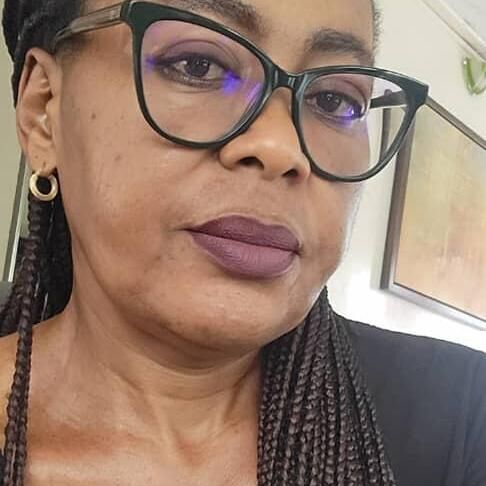
Professor, University of Buea
I am female Cameroonian born on the 22.10.1974 in Mankon Bamenda the Northwest Region OF Cameroon. A single mother of three children. Professor of Curriculum and Instruction. My main specialties are; Curriculum Development, Instructional Design, Teacher Education, Pedagogy, Curriculum...
Read More →
Friday October 9, 2026 1:40pm - 2:10pm
EDT
7 - Dining Room 5 - 6th Floor
MIT Samberg Conference Center, 50 Memorial Drive, Cambridge MA 02139 USA



