Loading…
All sessions are available online except round tables, special activities, and workshops.
Friday October 9, 2026 3:00pm - 3:30pm EDT
ID: 34016

Democratizing knowledge through OER is a vital first step toward equity, yet access to information does not inherently empower students to wield it effectively. As social and behavioral scientists, we have found a significant gap between analyzing a situation through open content and having the pedagogical support to actualize change within one’s own life. Therefore we propose that structuring the use of OER through feminist pedagogy allows instructors to move beyond “open access” to “open learning.”  In this session, we argue that OER can be used to promote an ethic of care, as its inherent flexibility allows us to honor the lived experiences our students already possess and disrupt the traditional power dynamics that often sideline their expertise in the classroom.Integrating care ethics with the behavioral science of how people experience and excel in their learning, we ground our discussion and recommendations in feminist pedagogy and cognitive and motivation science. First, feminist pedagogy provides a lens through which to challenge and decentralize power structures in the classroom by validating students both as experts in their own lives, and as possessing valuable and essential knowledge through their lived experiences (hooks, 1994). This lens is supported by cognitive science, which has established that people learn best by anchoring new knowledge to what they already know and have experienced (Ambrose et al., 2010). Finally, we connect these ideas to Self-Determination Theory which asserts that deep learning occurs when the educational environment supports students in feeling autonomous, competent and related (Ryan & Deci, 2017). Putting this into practice, we present a framework for OER development that serves both students and educators. For learners, we discuss how OER can prioritize contextualized inquiry by including assignments and reflection questions that prompt students to bridge course concepts with their individual and community interests. For example, rather than utilizing generic vignettes, materials for a developmental psychology class can invite students to engage content that relates to developmental policy issues (like early childcare) to empower them to be informed voters on related policies (Artez-Vega et al., 2023).At the same time, we advocate for the inclusion of robust "pedagogical marginalia” for teachers. These teaching notes can explicitly highlight how core concepts can be applied across varied family, work, and community settings. For example, in a management class, using examples of school, work and family situations to engage students in lessons on conflict management.  Embedding multimedia links, and real-world narratives can further help the material "come alive" and maintain a focus on ensuring material holds practical and personal relevance for students.As caring educators, we recognize that our students arrive with divergent goals and values. Responsible pedagogy leverages this diversity as an asset rather than expecting or forcing students to learn the same way and for the same reasons (Rognile et al., 2025). By developing and intentionally using open materials that honors these lived realities, we do more than lower costs, we create a classroom space that enables learners to apply themselves and their knowledge toward a more just world.
Speakers
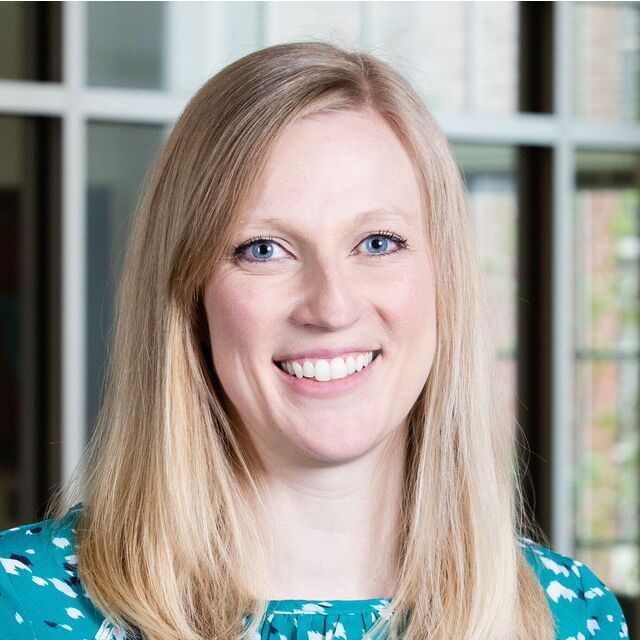
avatar for Kathryn Frazier

Kathryn Frazier

Associate Professor, Worcester State University
Kathryn E. Frazier, Ph.D. is an Associate Professor in the Psychology department at Worcester State University. She earned her Master’s in Psychology and Ph.D. in Developmental Psychology from Clark University. She publishes research on gender socialization and mental health, and... Read More →
ES

Elizabeth Siler

Professor, Worcester State University
Elizabeth Siler is a professor at Worcester State University in the Business Administration and Economics Department. She teaches management classes to undergraduate students and almost exclusively uses open education resources, and is an advisor for the Fiber Arts Circle student... Read More →
Friday October 9, 2026 3:00pm - 3:30pm EDT
4 Room T MIT Samberg Conference Center, 50 Memorial Drive, Cambridge MA 02139 USA

Sign up or log in to save this to your schedule, view media, leave feedback and see who's attending!

Share Modal

Share this link via

Or copy link
