Loading…
All sessions are available online except round tables, special activities, and workshops.
Friday October 9, 2026 10:30am - 11:00am EDT
ID: 32962

How can educators fully participate in scholarly knowledge-making when so much of the field remains restricted by paywalls or publication fees? This presentation shares findings from a comprehensive study of 1,205 education journals and their current open-access status. Using this dataset, we map the distribution of publishing models across the field, including subscription-based journals, hybrid journals, and fully open-access journals, in order to examine how openness operates in practice rather than as an abstract ideal. Although open access is often described as a public good that broadens the reach of scholarship, the publishing landscape in education reveals a far more uneven and contradictory reality. Many journals still depend on reader-side paywalls, while others shift the financial burden to authors through article-processing charges. In both cases, access remains constrained, and participation in scholarly communication is shaped by financial privilege.This session makes those structural barriers visible by showing how both pay-to-read and pay-to-publish systems limit who can access research, who can contribute to it, and whose work is most likely to circulate widely. Particular attention is given to hybrid-access models, which often preserve inequity under the appearance of openness. While hybrid journals may offer an open-access option, that openness is frequently available only to authors or institutions with the resources to pay publication fees. As a result, hybrid publishing can reproduce exclusionary dynamics while still allowing journals to claim alignment with open values.Beyond describing the problem, the session introduces the journal dataset as a practical resource for educators, librarians, academic leaders, and policy advocates. Participants will see examples of journal policies and publishing arrangements that illustrate the complexity of the current landscape. They will also be invited to consider how the dataset can support local decision-making, including identifying publication venues aligned with open-access values, reviewing institutional publishing guidance, and informing conversations between faculty, libraries, and campus leadership. A simple follow-along checklist will be shared that attendees can adapt for advocacy, policy review, or strategic planning.The session’s central claim is that open access should not be treated as a niche concern left solely to libraries or individual authors. Instead, colleges and universities can take a more active role in reducing barriers to knowledge by aligning promotion and tenure expectations, funding practices, publishing guidance, and institutional policy with long-term commitments to broader public access. Attendees will leave with a clearer understanding of the education journal landscape, a stronger vocabulary for discussing the limitations of hybrid openness, and concrete starting points for action within their own institutions.
Speakers
avatar for Lance Eaton

Lance Eaton

Senior Associate Director of AI in Teaching & Learning, Northeastern University
Lance Eaton, PhD, is Senior Associate Director of AI in Teaching & Learning at Northeastern University. His dissertation focuses on academic piracy and open-access practices. He has published and presented on open access, open education, and open pedagogy for the last 10 years.
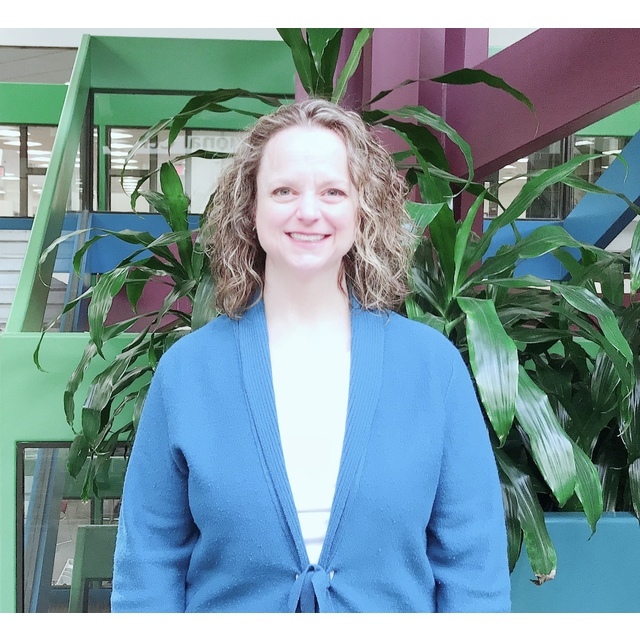
avatar for Danielle Leek

Danielle Leek

Project Director, Scottsdale Community College
Danielle Leek, PhD, is an instructor at Johns Hopkins University. She is also Project Director for the federally funded Open 4Peer Review initiative at Maricopa Community Colleges and Founder and Principal at Danielle Leek Consulting.
Friday October 9, 2026 10:30am - 11:00am EDT
2 Room M MIT Samberg Conference Center, 50 Memorial Drive, Cambridge MA 02139 USA

Sign up or log in to save this to your schedule, view media, leave feedback and see who's attending!

Share Modal

Share this link via

Or copy link
