ID: 30909
An estimated 1.3 billion people in the world experience some form of disability (WHO 2023). People with disabilities in many parts of the world face considerable institutional and attitudinal barriers to access education, health care, and employment, which means they are at a higher risk of poverty, inequalities, and discrimination (Asian Development Bank 2022; Department for International Development 2000; 2022; United Nations 2018; 2024; WHO, 2022; 2023).
Education is a fundamental right for everyone, but individuals with disabilities face significant challenges in accessing education. The crushing reality of higher expenses of learning resources, lack of availability of inclusive and accessible resources, financial barriers, educational inequality and discrimination, and above all, limited networking opportunities deters individuals with disabilities from becoming active contributors of knowledge.
The development of Open Educational Resources (OER) accelerates innovation, but not necessarily for individuals with disabilities. The available open platforms and resources are scarce and do not meet the academic needs of individuals with diverse disabilities. Furthermore, it is assumed that individuals with disabilities lack participation in developing academic and non-academic open resources due to a lack of OER awareness and limited collaborative opportunities with individuals without disabilities. Previous studies are unavailable that highlight the academic and technological challenges faced by individuals with and without disabilities and how OER can support and enhance their creativity. As a neurodivergent open education expert, I hold that unless we create opportunities for individuals with and without disabilities to collaborate, true inclusion, innovation, and equitable knowledge creation will remain unattainable.
This case study on empowerment and collaboration among people with and without disabilities aims to highlight their educational and technological challenges, provide them with online training on OER, and, as an outcome, develop a collective book on OER. A total of 10 individuals with neurodivergent, sensory, and physical disabilities, mainly from Asia and Europe, were selected. These participants were either working or studying at the university level. Another group of participants included 10 professors and academics. All participants were selected via the Global Forum for Teacher Educators—a virtual forum of teachers, educators, and individuals from over 75 countries. Initially, a form was circulated and individuals who showed interest were contacted. The project started in February 2025 and ended in January 2026.
In the first phase, online panel discussions were organized to identify the educational and technological challenges faced by individuals with and without disabilities. In the next phase, eight hours of accessible synchronous and asynchronous training on OER were offered, incorporating hands-on collaborative activities. As a final output, interested participants wrote chapters on diverse topics, which were then published as OER in accessible formats. Collaboration in the project was ensured through inclusive team formation, joint writing activities, peer feedback, shared online platforms, and continuous dialogue between participants with and without disabilities, enabling meaningful co-creation of knowledge.
At the end of the project, a focus group discussion was organized, during which participants highlighted that OER had enhanced their creativity and enabled them to share their ideas and viewpoints with a global audience. It helped develop understanding, empathy, creativity, and awareness of each other's learning needs. It also encouraged them to continue their creative work beyond the book project by using and producing OER on topics of their interest with others.
This project highlights the significance of empowering people with and without disabilities about OER and promoting inclusive knowledge creation through collaboration and shared learning. By catalyzing human connection and creativity, it demonstrates how accessible open education initiatives can bring diverse voices together to co-create knowledge and inspire innovative ideas that benefit global learning communities.
Speakers 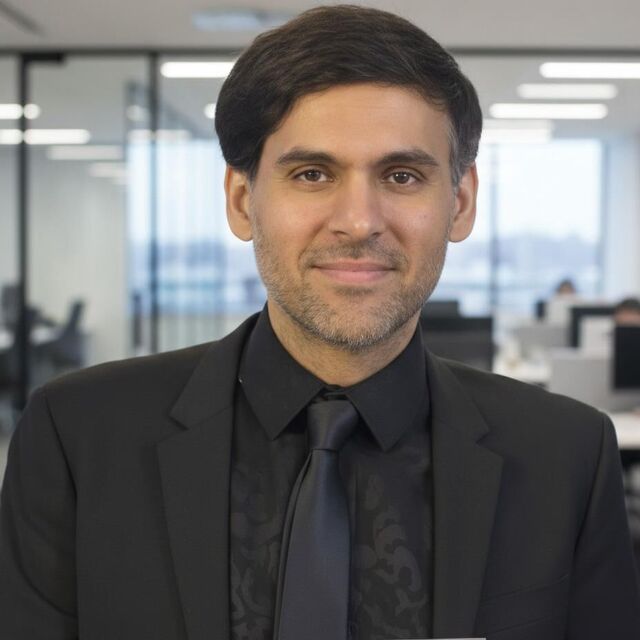
Global Education Expert, WID
Dr. Munir is an independent researcher, open education expert, disability advocate, and educational theorist. He holds a PhD in Education. He has published seven open books, both as a writer and editor. He has also completed the Charles Wallace Fellowship and the Global Heumann Fellowship...
Read More →
Wednesday October 7, 2026 11:50am - 12:20pm
EDT
2 - Salon M - 7th Floor
MIT Samberg Conference Center, 50 Memorial Drive, Cambridge MA 02139 USA



